




Our Blog

How do teeth move with braces?

November 18th, 2015

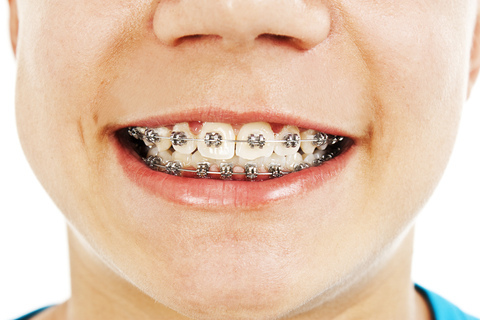
Although teeth seem to be solidly fixed in their sockets (at least they don’t wobble when we chew!), all teeth can easily be moved if Dr. Christopher West and our staff attach brackets and wires to them called braces. In the past, all braces were made of stainless steel, but today’s advanced dental technology gives people the option of wearing transparent, acrylic mouth trays called Invisalign®, or relying on traditional metal braces for correcting malocclusions.

Brackets, Slots, and Arch Wires – Oh My!

When light pressure is consistently exerted on teeth, they will gradually move in the direction of the force. For example, affixing brackets to front teeth and threading a flexible, metal wire through tiny slots on the front of the brackets allows the orthodontist to tighten this arch wire enough to initiate desired movement of teeth. Generally, orthodontic patients visit Family Orthodontics in Jupiter, FL once a month to have this wire tightened to keep teeth moving in the desired direction.

Tissues surrounding the teeth that experience pressure from arch wires will slowly (and, for the most part, painlessly) stretch, and allow the socket to enlarge so the tooth and its root become looser temporarily. This allows the root to move without causing bleeding or pain. Once Dr. Christopher West and our staff are satisfied with the repositioning of teeth, we will remove the braces and let bone material fill in the socket so that teeth are solidified into their new (and straighter) positions.

Clear Braces vs. Traditional Braces

Both types of orthodontic corrective devices move teeth in the same manner: by applying a continual force against teeth. Clear aligners, like Invisalign, are mouth trays made of hard acrylic material that people wear for at least 23 hours a day. Unlike metal braces, Invisalign can be removed for eating and brushing purposes and the aligners are nearly invisible because of their transparency.

Invisalign aligners are usually reserved for people with gaps between their teeth or whose teeth are only slightly crooked. Traditional metal braces are often necessary when severe malocclusion exists and requires more pressure than Invisalign offers.

How to Care for Your Invisalign® Aligners

November 11th, 2015

Is it possible to straighten the teeth without braces? Yes, it is. Welcome to the world of Invisalign aligners. Invisalign aligners are made from a clear, thermoplastic material that is custom made to fit your teeth. Unlike conventional braces, Invisalign aligners are removable. More importantly, the clear thermoplastic material makes the aligners invisible, which is ideal if the thought of metal braces and elastics make you self-conscious. For the best results, proper handling and care of your Invisalign aligners is important. Follow these steps to take care of your aligners:

1. Do not eat or drink hot beverages while wearing aligners. It's a good idea to get in the practice of removing the aligners before eating and drinking. Because the aligners are made of plastic resin, heat can distort and damage them. Also, eating while wearing the aligners will cause sugar and other food particles to stay on your teeth, which contributes to plaque and tooth decay.

2. Clean the aligner trays regularly. Invisalign aligners are exposed to the same bacteria and plaque that your mouth is, so you need to clean them as regularly as you clean your teeth. However, avoid cleaning the aligners with harsh chemicals. We recommend using a cleaning kit or some other type of specific solution. When it comes to cleaning Invisalign aligners, carefully follow the instructions given by Dr. Christopher West.

3. Store aligners in a cool, dry, safe place. When you’re not wearing the aligners, store them in the case provided by our office. If you don’t use the case, they can easily be lost. Keeping them out of reach of small children and pets is also a good idea. The last thing you want is for Fido to think your Invisalign aligners are chew toys.

4. Don’t chew gum while wearing aligners. There’s one thing that conventional braces and Invisalign aligners have in common: chewing gum damages both of them.

5. Don’t soak aligners in mouthwash. Many popular mouthwashes contain a color pigment. It’s possible that soaking Invisalign aligners in mouthwash will tint or stain them.

For more tips and tricks for a successful Invisalign experience, contact our Jupiter, FL office!

How do I know if I need braces?

November 4th, 2015

Perhaps you feel your teeth are not perfectly straight, or you think your bite could be adjusted. It’s quite possible that braces and other orthodontic treatments might be the right choice for you. As orthodontic professionals, our team at Family Orthodontics in Jupiter, FL works with your general dentist in order to determine the best options for your oral health and cosmetic appearance.

You might need braces if ...

  • You lost your baby teeth relatively early in life. If your baby teeth fell out too early and your adult teeth did not come in for a while, this could have affected the way your adult teeth grew and developed.
  • Your teeth look crowded or crooked. If you are embarrassed to smile because your teeth are not straight, it might be time to consider the cosmetic options available to you.
  • Your jaw shifts or makes sounds. This can signify a developmental issue with your teeth and your jaw line, and orthodontic treatment may be able to help. Set up an appointment with Dr. Christopher West if your jaw is recessed or protruding as well.
  • You are constantly biting the sides of your cheek or hitting the roof of your mouth. This could indicate that your teeth are not properly aligned. Braces can address an underbite or an overbite.
  • You have a difficult time chewing your food. This is not only an inconvenience, but it can also be detrimental for your health. Braces can help fix the alignment of your teeth.
  • You have to breathe through your mouth on a regular basis. You may not attribute this to an issue with the development of your teeth or jaw, but orthodontic treatment might be able to help.

The ideal age for a child to be seen by an orthodontist is age seven. However, there are many orthodontic treatment options available to adults. It is becoming increasingly common for adults to wear braces and other orthodontic devices. We recommend that people who are interested in braces and other orthodontic treatment options set up a consultation appointment with Dr. Christopher West today.

Halloween: Candy, costumes, and more!

October 28th, 2015

All Hallows' Eve, more commonly known as Halloween, is a yearly event celebrated on October 31, and one that is anticipated by the young and young at heart all over the world. Some scholars claim that Halloween originated from Celtic festivals that honored the dead or that celebrated the harvest, while others doubt that there's any connection at all to Samhain (a Gaelic harvest festival.) Regardless of its origin, our team at the orthodontic office of Dr. Christopher West hopes that Halloween is fun and enjoyed by all of our awesome patients!

Trick or treat?

In North America, Halloween is predominantly celebrated by children who dress up in costumes, which range from scary to cute, who then go around the neighborhood knocking on doors asking "trick or treat", and they are given candy in return. Trick-or-treating is a time honored tradition, and though many parents groan at the pounds and pounds of candy collected by youngsters and fear for the health of their teeth, there are a few things you can do to help their teeth stay in great shape until the candy is gone:

  • Limit the amount of candy they can consume each day
  • Have them brush their teeth after eating candy
  • Avoid hard, chewy candies as they can stick in hard to brush places
  • Keep candy out of sight to reduce temptation
  • Don't buy candy too far in advance to limit pre-Halloween consumption
  • Help or encourage your children to floss

Halloween Fun

Halloween isn't just about gorging on candy; there are other events associated with this festive day including carving jack-o'-lanterns, painting pumpkins, decorating sugar cookies, bobbing for apples, going to haunted houses, or just curling up on the couch with a bowl full of popcorn and watching some classic, scary movies.

Halloween Around the World

Some countries, like Australia, frown upon Halloween, claiming it is an American event and not based in Australian culture, while others like Italy have embraced the fun and celebrate much as Canadians and Americans do. Mexicans have been celebrating this fun day since around 1960, and it marks the beginning of the Day of the Dead festival. Some countries in Europe have come late to the party, but since the 1990s, countries like Sweden, Norway, and Germany have started celebrating Halloween as well, and finding children in costumes or having ghosts hanging in windows has become commonplace.

Halloween is about fun; stepping outside our normal lives and donning a costume or gathering with friends to knock on doors and ask for candy is as much a part of our culture as hot dogs and barbecue on Labor Day. Have a safe and happy Halloween from the team at Family Orthodontics in Jupiter, FL!

(561) 744-5456
1851 W Indiantown Rd #201
Jupiter, FL 33458
southern association of orthodontists florida association of orthodontists
american association of orthodontists florida dental association american dental association
Contact Us!
call email