




Our Blog

Does smoking affect oral health?

August 23rd, 2017
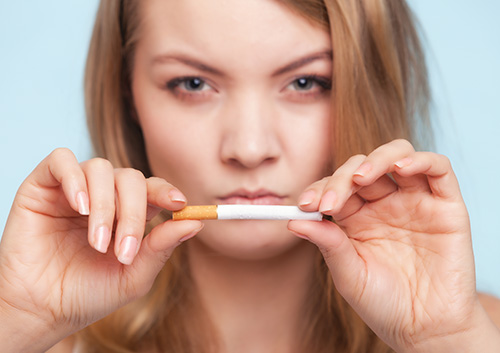
By now, everyone knows that smoking is bad for you. But the truth is its broad-reaching health effects are not all known by everyone. This is especially true of oral health. Smoking can have serious repercussions in this regard. To give you a better idea of how smoking can affect your oral health, Dr. Christopher West and our team have listed some issues that can arise.

Oral Cancer

Oral cancer can have steep ramifications for anyone that gets it. Surgery can be required to eliminate the cancer before it spreads to more vital parts of your body. Any type of cancer is about the worst health effect you can get, and this especially holds true to the affects that smoking has on your mouth. The type of mouth surgery required with oral cancer can leave your face deconstructed in certain areas, and it is all due to smoking or use of other tobacco products.

Tooth Discoloration and Bad Breath

At the very least, it is fair to say that as a smoker you will often have bad breath, and while you may try to cover it up with gum or mints, tooth discoloration is a whole other story. The chemicals and substances in cigarettes stick to your teeth staining them brown and yellow colors that are increasingly difficult to disguise.

Gum Disease and Loss of Bone

Another effect of smoking is the increased risk of gum disease. Your gums may start to recede, which can eventually lead to the loss of teeth. Smoking can also increase bone loss and density in your jaw which is vital to the health of your mouth. Gum disease and bone loss are two signs that smoking is definitely bad for your mouth.

When it comes to the health of your mouth, the question is not whether smoking affects your health, it's how does it affect your health and to what degree. If for no other reason than because smoking involves your mouth as its entry point, it is safe to say that it can have long-lasting and detrimental consequences on your oral health.

To learn more about smoking and your oral health, contact our Jupiter, FL office to schedule an appointment with Dr. Christopher West.


What makes teeth crooked?

August 16th, 2017

Dr. Christopher West and our team hear this question a lot. Some of the common reasons for crooked teeth include:

  • Thumb sucking
  • Tongue thrusting or improper use of the tongue during speaking and swallowing
  • Premature loss of baby teeth, which causes teeth to drift and shift
  • Poor breathing airway caused by enlarged adenoids or tonsils

There are also hereditary factors we get from our parents, like:

  • Extra teeth
  • Large teeth
  • Missing teeth
  • Wide spaces between teeth
  • Small jaws

Dr. Christopher West and our team know that having crooked teeth isn’t just a cosmetic issue; it can lead to serious health problems as well. Crooked teeth can:

  • Interfere with proper chewing
  • Make keeping teeth clean more of a challenge, increasing the risk of tooth decay, cavities, and gingivitis
  • Strain the teeth, jaws, and muscles, increasing the risk of breaking a tooth

There are several treatment options we offer at Family Orthodontics in Jupiter, FL that can help correct crooked teeth. Please give us a call at our convenient Jupiter, FL office to learn more or to schedule an initial consultation.

Proper Diet while Undergoing Orthodontics

August 9th, 2017

Many people undergo orthodontic treatment during childhood, adolescence, and even into adulthood. Wearing orthodontic appliances like braces is sure to produce a beautiful smile. Though orthodontic treatments at Family Orthodontics in Jupiter, FL are designed to accommodate your lifestyle, chances are you will need to make some dietary modifications to prevent damage to your braces and prolong orthodontic treatment.

The First Few Days with Braces

The first few days wearing braces may be the most restrictive. During this time, the adhesive is still curing, which means you will need to consume only soft foods. This probably will not be a problem, however, as your teeth may be tender or sensitive while adjusting to the appliances.

Orthodontic Dietary Restrictions

You can eat most foods normally the way you did without braces. However, some foods can damage orthodontic appliances or cause them to come loose. Examples of foods you will need to avoid include:

  • Chewy foods like taffy, chewing gum, beef jerky, and bagels
  • Hard foods like peanuts, ice chips, and hard candy
  • Crunchy foods like chips, apples, and carrots

How to Continue to Eat the Foods You Love Most

Keep in mind that you may still be able to enjoy some of the foods you love by making certain modifications to the way you eat them. For example, steaming or roasting carrots makes them softer and easier to consume with braces. Similarly, you can remove corn from the cob, or cut up produce like apples and pears to avoid biting into them. Other tips include grinding nuts into your yogurt or dipping hard cookies into milk to soften them. If you must eat hard candies, simply suck on them instead of biting into them.

If you have any question whether a food is safe to eat during your treatment with Family Orthodontics in Jupiter, FL, we encourage you to err on the side of caution. Of course, you can always contact our Jupiter, FL office with any questions you have about your diet and the foods that should be avoided during treatment. By following our dietary instructions and protecting your orthodontic appliances from damage, you will be back to chewing gum in no time.

What is early intervention?

August 2nd, 2017

Many developing orthodontic problems can be intercepted and corrected if diagnosed and treated at an early age. Dr. Christopher West and our team at Family Orthodontics in Jupiter, FL recommend children have their first orthodontic evaluation no later than age seven, or younger if the front four permanent teeth have replaced the baby teeth. Early treatment, also known as interceptive treatment or Phase I treatment, provides both timely detection of problems and greater opportunity for more effective treatment. Early intervention guides growth and development, preventing serious problems later.

If your child is showing these signs, it may be time to think about early orthodontic treatment:

  • Early or late loss of baby teeth (your child should typically start losing teeth around age five or six, and will have all their permanent teeth in around age 12 to 13)
  • Difficulty chewing and/or biting
  • Mouth breathing
  • Sucking his or her thumb
  • Speech impediment
  • Protruding teeth (the top teeth and the bottom teeth extend away from each other)
  • Crowded front teeth
  • Teeth that don't come together in a normal manner or even at all

Early intervention will greatly reduce the severity of your child’s case, and therefore reduce the length of treatment time and cost for a second phase of treatment when all of his or her permanent teeth have erupted. An evaluation at our Jupiter, FL office will determine if your child’s dental and skeletal growth is proceeding properly or if interceptive treatment is needed. Many times, a more severe problem can be corrected using sophisticated removable appliances instead of traditional orthodontic treatment.

To schedule a consultation for your child to visit with Dr. Christopher West, please give us a call! We will provide your child with an initial exam, and discuss with you the best steps to take toward caring for your child's smile.

(561) 744-5456
1851 W Indiantown Rd #201
Jupiter, FL 33458
southern association of orthodontists florida association of orthodontists
american association of orthodontists florida dental association american dental association
Contact Us!
call email