




Our Blog

Periodontics and Braces Treatment

March 3rd, 2021

Most people think braces are all about their teeth. While it is true orthodontics is meant to move your teeth into proper position, there's more to it than that. To safely move your teeth with braces, you're going to need healthy and stable gums (or periodontium—the tissues that support your teeth).

For this reason it's critical to have your periodontal health evaluated prior to getting braces. This applies particularly to adults, since a 2013 study by the Center For Disease Control found that an estimated 47.2% of adults 30 years of age and older had periodontitis (gum disease). If you do have periodontitis, moving your teeth with braces will only make things worse.

Conversely, there is also risk for periodontal disease if you don't get orthodontic treatment. Malocclusion, as well as crooked and spaced teeth, can all contribute to periodontal disease. In these situations your teeth and gums are more difficult to clean and become breeding grounds for disease causing bacteria. Bad oral hygiene combined with these traits can greatly contribute to the development of periodontitis.

So, periodontics and braces have a tricky relationship. On one hand, you shouldn't get braces if you show signs of developing or have periodontitis, while on the other hand, braces can help prevent the possibility of developing periodontitis by correcting the bite and straightening the teeth.

If you are 30 years of age or older and are considering getting braces, it would be wise to first:

  • Let Dr. Christopher West know about your desire to get braces
  • Get an exam to make sure you're in good periodontal health and a good candidate for braces
  • If you are a good candidate, keep an eye on your teeth and gums and get regular dental checkups throughout your entire course of treatment.

If you are in any doubt about the status of your teeth and gums, it's always best to get them checked before embarking with braces treatment. For more information or to have your periodontal health assessed for braces treatment, please contact our Jupiter, FL office.

I Have Gum Disease. Can I Still Get Braces?

February 17th, 2021

Gum disease is one of our most common dental diseases, affecting both children and adults. If you are considering getting braces or aligners, make sure your gums are their healthiest before beginning orthodontic treatment.

  • Gingivitis

For both younger and older patients, gingivitis (mild gum disease) can be the result of poor brushing and flossing habits. When plaque builds up around the teeth and gums, it irritates delicate gum tissue. The gums become inflamed, and symptoms such as redness, swelling, tenderness, bleeding, and bad breath can result. Usually, your dentist can treat early stages of gingivitis with tips on more efficient brushing and flossing, a professional cleaning, and suggestions for mouth rinses if needed.

Because brushing and flossing with braces can be more difficult, you need to devote special attention to your cleaning routine to prevent gingivitis from developing after you start treatment. Talk to us any time about how to brush and floss most effectively when you wear braces. Dr. Christopher West can also recommend tools designed especially for braces wearers to get your teeth and gums as clean and plaque-free as possible. If you are a candidate for clear aligners, this option can make it easier to keep your teeth their cleanest. We’ll work with you to keep your gums healthy as your orthodontic work takes place.

  • Periodontitis

For older patients, gingivitis, left untreated, can eventually lead to periodontitis (severe gum disease). This chronic infection can lead to the formation of pockets between your gums and teeth that become home to bacteria and infection. Over time, periodontitis can lead to the destruction of gum, ligament, and bone tissue. Left untreated, it can lead to loose teeth and even bone and tooth loss.

Making sure you schedule regular dental exams will allow your dentist or periodontist to detect and treat any signs of periodontitis as early as possible. If you have any of the symptoms of gum disease, it’s important to treat the cause of these symptoms as soon as possible to protect your gums, bone, and teeth. Deep cleaning procedures such as scaling and root planing, topical and oral antibiotics, and oral surgeries such as flap surgery or bone and tissue grafting can help reverse the effects of periodontitis.

Because orthodontic treatment involves moving the teeth and re-forming the ligament and bone tissue, which hold them in place, you need healthy periodontal ligaments and bones to begin treatment. If you have suffered shifting teeth or bone loss due to periodontitis, talk to us. We will let you know at your visit to our Jupiter, FL office if you are a good candidate for orthodontic work, and which type of appliance is best for your periodontal health.

We are happy to talk to you about the best way to achieve an attractive smile and a healthy bite if gum disease has been a problem in the past. Most important, we want to make sure that your teeth and gums are their healthiest even before you begin orthodontic treatment. Preventing and treating gum disease will provide the foundation you need for a lifetime of beautiful smiles.

Happy Valentine's Day!

February 12th, 2021

Happy February from Family Orthodontics. This year Dr. West and the team will be celebrating Valentine’s Day by decorating the office with lots of color- pink and red specifically! Valentine’s Day isn’t only about showing love to your significant other; It’s also about celebrating all the meaningful relationships in your life like those with families and friends. Join us on today’s blog as we celebrate the month of love!

Good relationships always take a little bit of nurturing and work to maintain. The best love advice Dr. West has ever received is to always be kind and respectful to everyone you come across because you never know what role they could play in your life down the line. Dr. West strives to make and maintain good connections and be open-hearted with all those he crosses paths with.

Valentine’s Day is all about showing the ones you love how much you care. To express his appreciation for loved ones on Valentine’s Day, Dr. West takes time to write cards to convey how much his loved ones mean to him. Even when it’s not Valentine’s Day Dr. West tells his family he loves them each and every day.

In a time of social distancing, there’s no need to leave the house to go on a lovely date. To prove this, Dr. West has a wonderful at-home date idea you can try out this year! Have your kids plan and set up a fake date night where they get to prepare and serve you and your significant other a dinner with dessert as if you were at a restaurant. Who’s brave enough to have their kids cook them dinner?

In the office, there isn’t a Valentine’s Day promotion but there’s the wheel of prizes! Come in and see us today for your chance to win.

We hope everyone has a wonderful February. Have a lovely Valentine’s Day spent with the ones you love!


Does Your Valentine Wear Braces?

February 10th, 2021

The Valentine shopping list is traditional and simple: Flowers. Candy. But if your Valentine is in braces this year, suddenly your choices become more complicated. No need to worry! Dr. Christopher West and our Jupiter, FL team have some sweet suggestions that are both braces-friendly and Valentine-approved.

First, let’s look at some options where Cupid’s arrow has missed the mark.

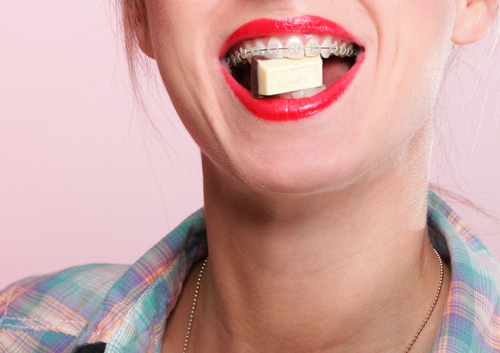
  • Caramels—these sticky treats are difficult to clean from orthodontic work, and sticky, chewy foods can even cause damage to wires and brackets.
  • Chocolate covered nuts—hard foods such as nuts can break or bend wires and brackets.
  • Assorted chocolates—a confectionary minefield! There are bound to be some caramels and nuts in there somewhere, hiding beneath an innocent coat of chocolate, just waiting to ruin your Valentine’s evening.
  • Other candies such as taffy, licorice, hard candy? No, no, and no. Remember, anything sticky, chewy, or hard is on the “Loves Me Not” list.

So, which chocolate treats won’t break hearts or braces?

  • Soft truffles—if it’s not Valentine’s Day without a be-ribboned box of chocolates, choose soft truffles to fill it.
  • Chocolate mousse—the perfect end to a romantic dinner.
  • Chocolate covered strawberries—it’s a special occasion treat that won’t mistreat braces.
  • Rich chocolate cake—always a delightful indulgence, and even better if it’s in the shape of a heart.

If your Valentine is not a chocolate fan, there are other sweet treats that are delicious alternatives.

  • Cheesecake can be topped with (pitted!) cherries to celebrate in holiday-appropriate color.
  • Soft heart-shaped cookies will be even more romantic with decorative icing—add your initials for a personal touch.
  • Select an array of frozen yogurt, ice cream, or gelato in different shades of pink.
  • Macarons also come in a variety of pink and red shades—but make sure this confection is on your Valentine’s braces-friendly list!

Of course, you can celebrate the day without sugary tributes. A single flower, watching your favorite movie together or, best of all, a heartfelt card or letter are all wonderful ways to show you care. But if it’s just not the same holiday without a sweet treat, try some of our suggestions. Your Valentine will appreciate your thoughtfulness.

(561) 744-5456
1851 W Indiantown Rd #201
Jupiter, FL 33458
southern association of orthodontists florida association of orthodontists
american association of orthodontists florida dental association american dental association
Contact Us!
call email